How to choose a wedding band finish for real life
A ring’s surface is one of the first things people notice, but it is also one of the details you will live with most closely. The same band profile can feel formal, modern, soft, or quietly rugged depending on how the metal reflects light. The right finish is not simply the one that photographs best. It is the one that still feels natural when your hands are busy with the ordinary work of a shared life.
Polished: bright, traditional, and reflective
A polished finish is smooth enough to reflect the room around it. It gives a wedding band an immediate sense of ceremony and works beautifully with simple silhouettes. Couples who want a classic ring with a clean line often find polished gold or platinum especially appealing. The trade-off is that everyday marks can be easier to see on a mirror-like surface. Many owners enjoy this changing record of use; others prefer a finish that disguises small scratches.
Brushed and satin: quiet texture for everyday wear
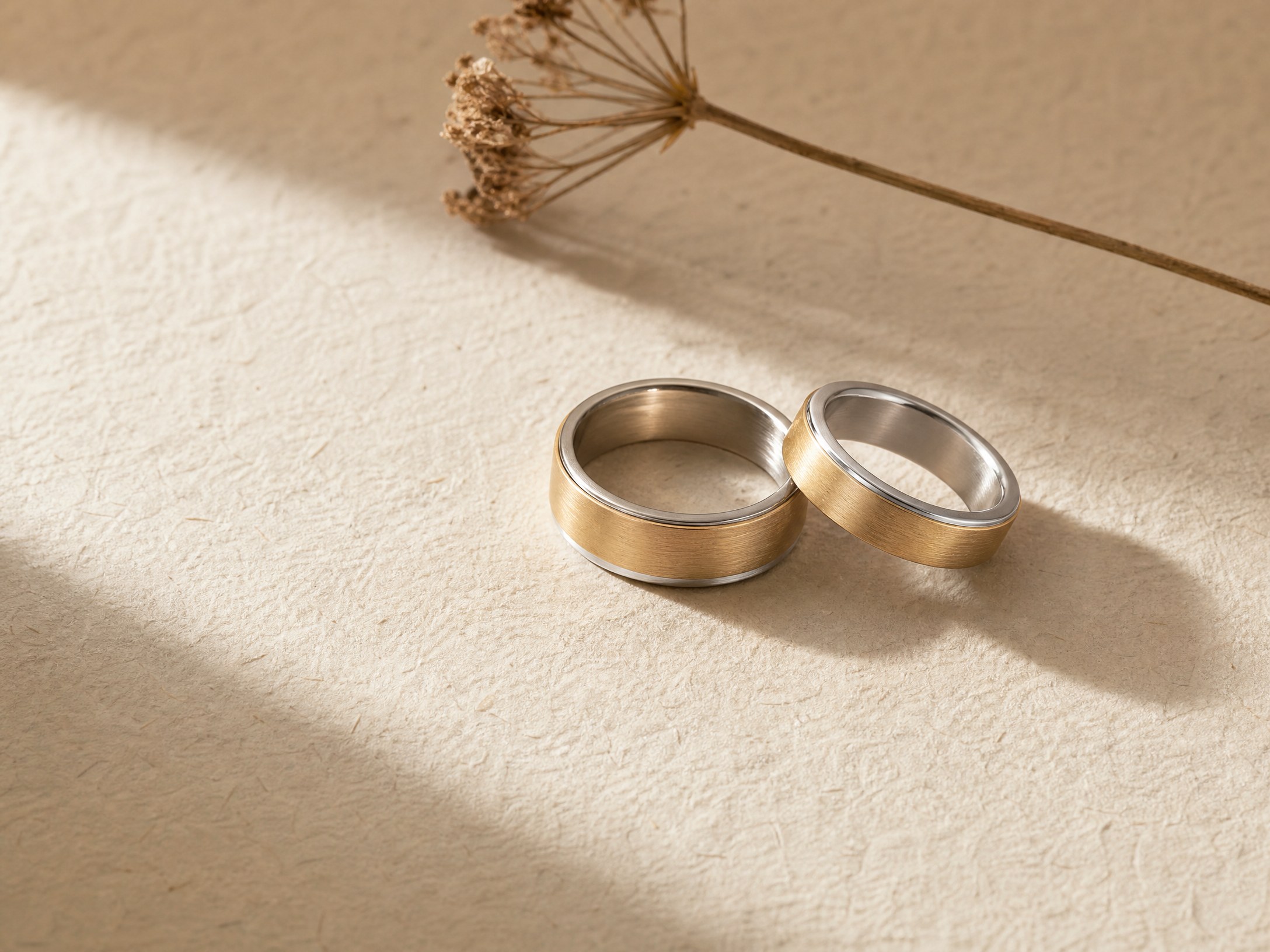
Brushed finishes scatter light rather than bouncing it directly back. The result is softer, more architectural, and often easier to wear from morning to evening. A satin finish offers a similarly restrained mood, with a fine surface texture that keeps attention on the shape of the ring instead of its shine. These finishes are a strong fit for people who prefer understated jewelry or who want a band to sit comfortably beside a watch or other daily pieces.
Hammered and hand-finished: a little more story
Hammered textures create a pattern of small planes across the band. No two reflections are exactly alike, which makes the surface feel personal and slightly more expressive. This does not have to mean rustic. A fine, shallow hammer texture can look refined when paired with a narrow profile, a smooth inner edge, or a carefully chosen metal. It is a useful option when you want a ring to feel individual without relying on a large stone or a prominent engraving.
Three questions before you decide
First, think about the places where the ring will go with you: an office, a studio, a garden, a kitchen, or frequent travel. Second, decide whether you want the surface to reveal time or soften it. Third, compare the finish in daylight rather than relying on showroom spotlights. The surface should make sense beside your skin, your partner’s ring, and the objects you already wear.
For the wider meaning behind this decision, return to the three questions in our main wedding ring guide. If the ring is part of an anniversary tradition, continue with small anniversary rituals for couples that make the object feel connected to the years around it.